Chia seeds are a nutritional powerhouse packed with fiber, protein, omega-3 fatty acids, and essential nutrients. They have gained popularity as a natural and effective aid for weight loss. In this article, we will explore how chia seeds help with weight management and the best ways to incorporate them into your diet.
Are Chia Seeds Good for Weight Loss?
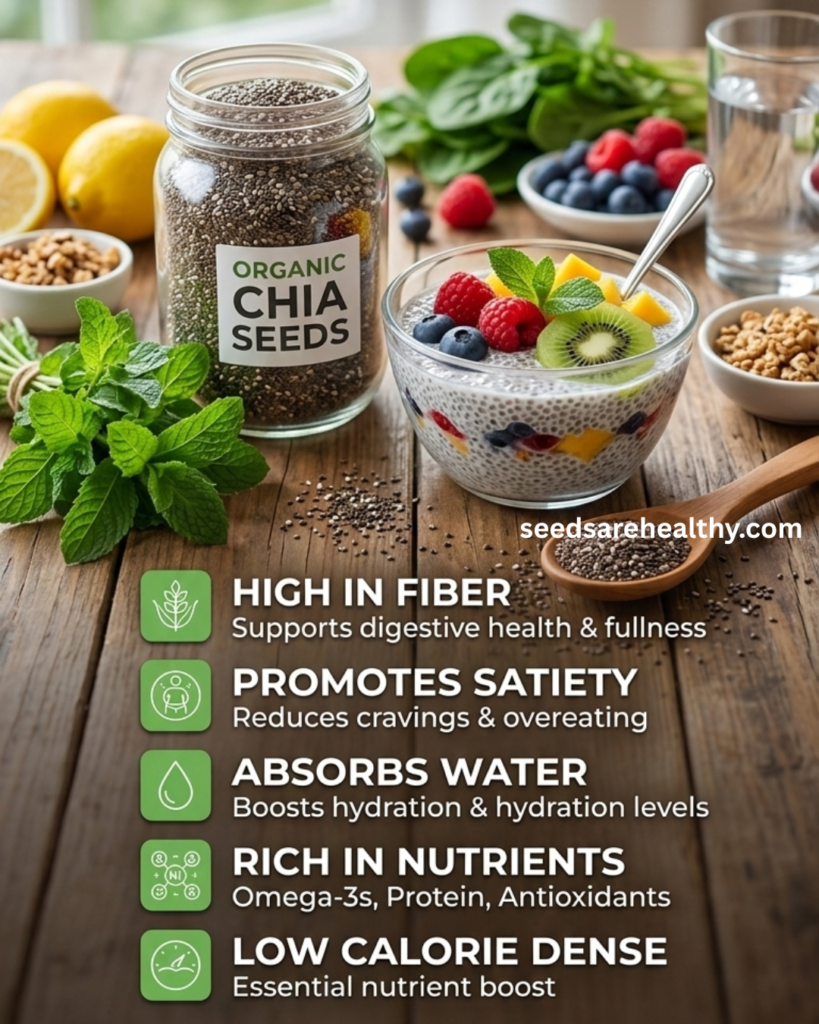
Chia seeds are often included in weight management diets because they combine several properties that support appetite control and balanced nutrition. They are rich in fiber, contain moderate plant-based protein, and absorb significant amounts of water when soaked. This combination can help increase feelings of fullness and reduce overall calorie intake throughout the day.
However, chia seeds are not a magic solution for weight loss. Sustainable weight management depends on a balanced diet, regular physical activity, and consistent lifestyle habits. Chia seeds work best as part of a healthy eating pattern rather than as a standalone weight loss remedy.
When consumed in appropriate portions, they can help support satiety, stabilize energy levels, and improve overall diet quality.
How Chia seeds Support Weight Loss
1. Keeps You Full for Longer (Reduces Appetite)
Chia seeds absorb liquid and expand in the stomach, forming a gel-like consistency that slows down digestion. This helps increase satiety, reducing hunger and preventing overeating.
2. High in Fiber (Supports Digestion and Gut Health)
Chia seeds are rich in dietary fiber, with around 10 grams per 2 tablespoons. Fiber aids digestion, promotes gut health, and helps prevent constipation, all of which contribute to healthy weight management.
3. Rich in Protein (Reduces Cravings)
Protein is known to reduce appetite and food cravings. Chia seeds contain plant-based protein, which helps in maintaining muscle mass while promoting fat loss.
4. Boosts Metabolism and Fat Burning
The omega-3 fatty acids in chia seeds may help enhance fat-burning processes, reduce inflammation, and support metabolic functions, leading to better weight control.
5. Regulates Blood Sugar Levels
Chia seeds help slow down carbohydrate digestion, preventing blood sugar spikes and crashes. This stabilization reduces cravings and helps prevent sudden hunger pangs.
6. Hydration and Detoxification
When soaked, chia seeds absorb 10-12 times their weight in water, keeping the body hydrated and aiding in detoxification by promoting healthy digestion and toxin removal.
Medical Disclaimer
The information provided on this website is for educational and informational purposes only and is not intended as medical advice. It does not replace professional medical consultation, diagnosis, or treatment. Always seek the advice of a qualified healthcare professional before making any changes to your diet, health routine, or lifestyle.
Chia Seeds Calories and Portion Control
Although chia seeds support weight management, they are still calorie dense. Understanding portion size is important when adding them to a weight loss diet.
A typical serving size is:
• 1 tablespoon: about 60 calories
• 2 tablespoons: about 120 calories
These calories come primarily from healthy fats, fiber, and plant-based protein.
Because chia seeds expand when soaked, even a small amount can feel filling. Most nutrition guidelines suggest consuming 1 to 2 tablespoons per day as part of a balanced diet.
For a detailed breakdown of nutrients and calories, see our complete chia seeds nutrition guide.
Why Fiber Plays a Key Role in Weight Management
One of the main reasons chia seeds are associated with weight management is their exceptionally high fiber content.
Fiber helps with weight control in several ways:
• Slows digestion and prolongs fullness
• Reduces rapid spikes in blood sugar
• Supports healthy gut bacteria
• Helps regulate bowel movements
Because fiber takes longer to digest, meals that include fiber-rich foods like chia seeds tend to keep you satisfied longer than low-fiber alternatives.
This effect can help reduce snacking between meals and support better calorie control throughout the day.
When Chia Seeds May Not Support Weight Loss
Although chia seeds can support healthy eating habits, they may not always lead to weight loss if used incorrectly.
Some common situations include:
• Consuming excessive portions
• Adding them to high calorie desserts
• Drinking sweetened chia beverages
• Not adjusting overall calorie intake
For example, adding several tablespoons of chia seeds to smoothies or desserts can significantly increase daily calorie intake.
Moderation is key. Chia seeds should complement a balanced diet that includes vegetables, lean protein, whole grains, and healthy fats.
How to Use Chia Seeds for Weight Loss
1. Chia Water
One of the simplest ways to consume chia seeds for weight loss is by drinking chia water:
Mix 1-2 tablespoons of chia seeds in a glass of water.
Let them soak for 20-30 minutes until they expand.
Drink before meals to promote fullness and reduce calorie intake.
2. Chia Smoothies
Adding chia seeds to smoothies boosts fiber and protein content:
Blend chia seeds with fruits, vegetables, yogurt, and milk or plant-based alternatives.
Let the mixture sit for a few minutes to thicken before drinking.
3. Chia Yogurt
A nutritious snack or breakfast option:
Mix 1 tablespoon of chia seeds into yogurt.
Let it sit for 10-15 minutes or overnight for a pudding-like texture.
Add fresh fruits, nuts, or honey for extra flavor.
4. Chia Overnight Oats
A fiber-rich, weight-loss-friendly breakfast:
Combine 1 tablespoon of chia seeds with oats, milk, and fruit.
Let it soak overnight for a thick and creamy texture.
5. Chia Pudding
A delicious and satisfying meal replacement:
Mix 2 tablespoons of chia seeds with 1 cup of milk (or plant-based milk).
Stir well and refrigerate overnight.
Top with berries, nuts, or cacao nibs before eating.
Should Chia Seeds Be Soaked Before Eating?
Many people prefer soaking chia seeds before consumption. When soaked in water or milk, chia seeds absorb liquid and form a gel-like texture that is easier to digest.
Benefits of soaking chia seeds include:
• Improved digestion
• Better hydration
• Reduced choking risk
• More even nutrient absorption
Soaking is not mandatory, but it can make chia seeds more comfortable for beginners to consume.
You can also read about mistakes when eating chia seeds to understand proper preparation methods.
Possible Side Effects of Eating Too Many Chia Seeds
Although chia seeds are generally safe, consuming very large amounts may cause digestive discomfort for some people.
Possible side effects include:
• Bloating
• Gas
• Stomach discomfort
• Constipation if hydration is low
These issues usually occur when fiber intake increases too quickly.
To reduce the risk:
• Start with small amounts
• Drink enough water
• Increase intake gradually
If you experience persistent discomfort, consult a healthcare professional.
If you experience digestive discomfort, read our guide on stomach pain or bloating after eating chia seeds.

Chia Seeds vs Sunflower Seeds for Weight Loss
Both chia seeds and sunflower seeds are nutrient-dense and can support healthy eating habits. However, they contribute to weight management in slightly different ways due to their fiber, fat, and nutrient profiles.
The table below highlights the key differences between these two popular seeds.
| Feature | Chia Seeds | Sunflower Seeds |
|---|---|---|
| Calories (1 oz / 28g) | ~138 calories | ~164 calories |
| Fiber | Very high (about 10g per 2 tbsp) | Moderate (about 2–3g per serving) |
| Protein | Moderate plant protein | Slightly higher protein |
| Healthy Fats | Rich in omega-3 fatty acids | Rich in vitamin E and omega-6 fats |
| Satiety | Very high due to fiber and gel formation | Moderate fullness from fats and protein |
| Best Use | Smoothies, puddings, yogurt, oats | Snacks, salads, baking, seed mixes |
Both seeds can support healthy eating patterns when consumed in moderate portions. Including a variety of seeds in your diet can provide a wider range of nutrients.
For a deeper look at calories and nutrients, read our sunflower seeds nutrition guide to compare their nutritional profile with chia seeds.
Frequently Asked Questions About Chia Seeds and Weight Loss
Do chia seeds help burn belly fat?
Chia seeds do not specifically burn belly fat, but their fiber and protein content may help promote fullness and reduce overall calorie intake.
How many chia seeds should I eat per day for weight loss?
Most people consume 1 to 2 tablespoons per day. Beginners may start with 1 teaspoon and gradually increase.
Can I drink chia water every day?
Yes, chia water can be consumed daily in moderate amounts as part of a balanced diet.
Are chia seeds better in the morning or at night?
Chia seeds can be consumed at any time of day. Many people prefer them in breakfast meals because their fiber helps maintain fullness throughout the morning.
Do chia seeds cause bloating?
Some individuals may experience temporary bloating if they increase fiber intake quickly. Drinking enough water and starting with small portions can help reduce this effect.
Final Thoughts
Chia seeds can be a valuable addition to a weight management plan because they provide fiber, plant-based protein, and healthy fats that help support satiety and balanced nutrition. Their ability to absorb liquid and expand in the stomach may also contribute to feeling full for longer periods.
However, chia seeds work best when combined with an overall healthy lifestyle that includes balanced meals, portion control, and regular physical activity.
By incorporating chia seeds into meals such as smoothies, yogurt, oats, or puddings, they can become a simple and nutritious component of a sustainable eating pattern.
Recent Posts
- Chia Seeds for Weight Loss: Benefits, Calories, and How to Use Them
- Sunflower Seeds Nutrition: Calories, Benefits, Side Effects & How to Use Them
- How Long Do Chia Seeds Last? Complete Shelf Life Guide (Pantry, Fridge & Freezer)
- Can Chia Seeds Go Bad in the Fridge? Shelf Life, Signs, and Storage Tips
- Chia Seeds for Beginners: How to Start Slowly and Safely