
Chia seeds are widely used in everyday meals because of their fiber content and versatility. While they are easy to add to foods and drinks, many people unknowingly make small mistakes when consuming chia seeds, especially when they are new to them.
Most issues related to chia seeds are not caused by the seeds themselves, but by how they are prepared, portioned, or combined with other foods. This article highlights some of the most common mistakes people make when eating chia seeds and explains how to avoid them in a simple, practical way.
The information shared here is educational and intended to help readers use chia seeds more comfortably as part of regular meals
Medical Disclaimer
The information provided on this website is for educational and informational purposes only and is not intended as medical advice. It does not replace professional medical consultation, diagnosis, or treatment. Always seek the advice of a qualified healthcare professional before making any changes to your diet, health routine, or lifestyle.
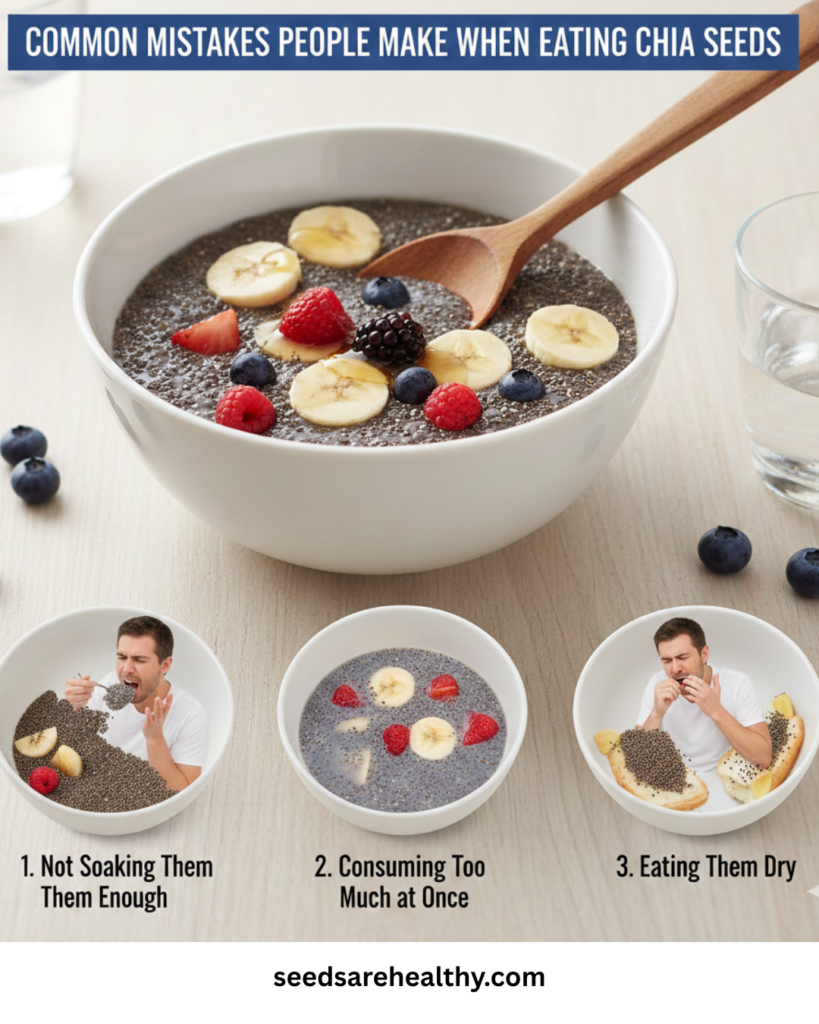
Mistake 1: Eating Too Much Too Quickly
One of the most common mistakes is consuming large amounts of chia seeds right away. Chia seeds are high in fiber, and suddenly increasing fiber intake may feel uncomfortable for people who are not used to it.
A gradual approach allows the body to adjust and helps reduce digestive discomfort.
Better approach:
Start with small portions
Increase slowly over several days
Observe how your body responds
Many issues occur when beginners starting chia seeds increase portions too quickly or skip hydration.
Mistake 2: Eating Dry Chia Seeds Without Enough Liquid
Dry chia seeds absorb liquid after consumption. When eaten without sufficient fluids, they may expand inside the digestive tract, which can feel uncomfortable for some people.
This mistake often happens when chia seeds are sprinkled onto dry foods without considering hydration.
Better approach:
Soak chia seeds before consuming them in drinks
Pair dry chia seeds with moist foods
Drink enough water throughout the day
Mistake 3: Skipping the Soaking Step When Needed
Although soaking chia seeds is not mandatory, many people find soaked chia seeds easier to consume, especially in beverages and soft foods. Skipping soaking when adding chia seeds to liquids may result in uneven texture or clumping.
Soaking allows chia seeds to absorb liquid evenly and form a gel-like consistency.
Better approach:
Soak chia seeds for 15–30 minutes when using them in drinks
Stir well before consuming
For detailed soaking ratios and methods, read our step by step guide on how to soak chia seeds properly.
Mistake 4: Adding Chia Seeds to Every Meal
Another common mistake is adding chia seeds to multiple meals in the same day, especially when first starting out. While chia seeds are versatile, moderation is important.
Using chia seeds in every meal may unintentionally increase fiber intake beyond what feels comfortable.
Better approach:
Use chia seeds in one or two meals per day
Keep portions moderate
Balance them with other foods
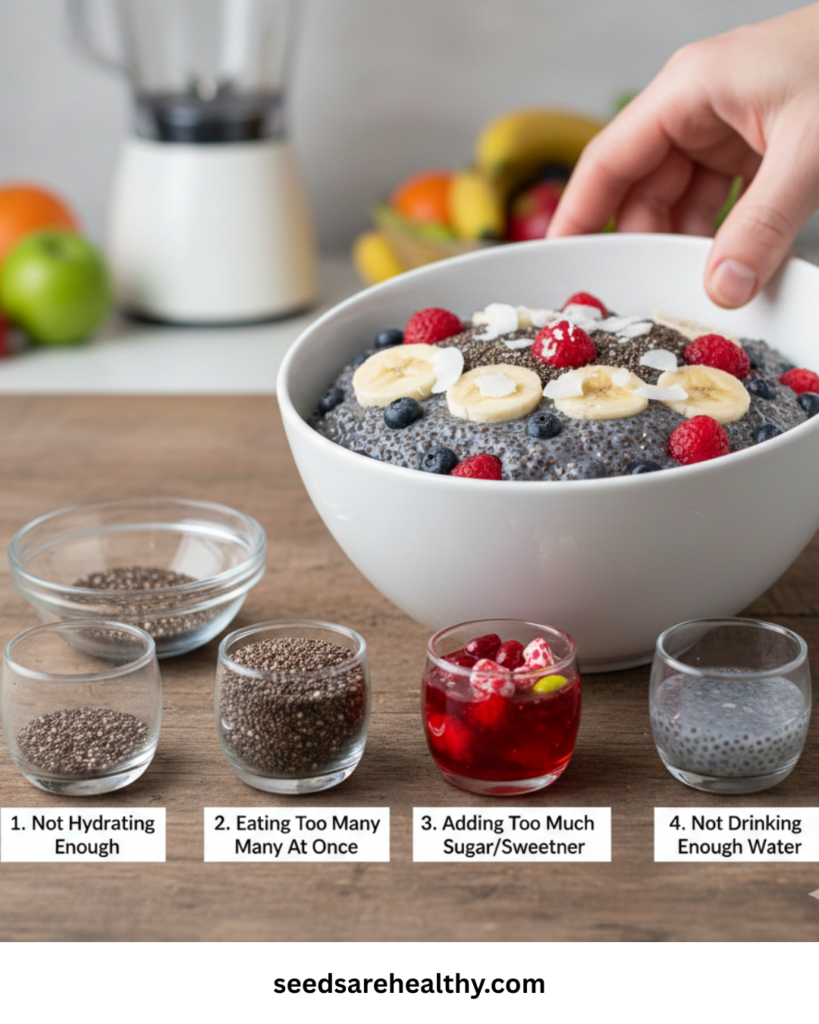
Mistake 5: Not Paying Attention to Hydration
Because chia seeds absorb liquid, hydration plays an important role when including them in meals. Insufficient water intake may contribute to temporary discomfort for some individuals.
This is especially relevant when chia seeds are consumed dry or in solid foods.
Better approach:
Drink water regularly throughout the day
Pair chia seeds with fluids or water-rich foods
Mistake 6: Expecting Immediate Results
Some people expect immediate changes after adding chia seeds to their meals. Chia seeds are a food ingredient, not a quick solution, and their role is best understood as part of an overall eating pattern.
Focusing too much on outcomes rather than consistency can lead to disappointment.
Better approach:
Treat chia seeds as one component of a balanced diet
Focus on regular, mindful use rather than quick changes
You can also explore the complete overview of chia seeds health benefits to understand their role in daily meals.
Mistake 7: Ignoring Individual Tolerance
Everyone’s digestion is different. A preparation method that works well for one person may feel uncomfortable for another.
Ignoring personal tolerance and following generic advice without adjustment can lead to unnecessary discomfort.
Better approach:
Pay attention to how your body reacts
Adjust portion size or preparation method if needed
Choose soaked or dry chia seeds based on comfort
Frequently Asked Questions
Are chia seeds safe when eaten regularly?
Chia seeds are generally considered safe when consumed in moderation as part of a balanced diet, with adequate hydration.
Should chia seeds always be soaked?
Soaking is not required, but many people prefer soaked chia seeds for drinks and soft foods.
Can eating chia seeds cause digestive discomfort?
Discomfort is usually related to portion size, hydration, or rapid increase in fiber rather than the seeds themselves.
How can beginners avoid common mistakes?
Starting with small amounts, staying hydrated, and choosing simple preparation methods can help beginners avoid most issues.
Final Thoughts
Most problems associated with eating chia seeds come down to preparation, portion size, and hydration rather than the seeds themselves. By starting slowly, paying attention to fluid intake, and choosing preparation methods that feel comfortable, chia seeds can be included smoothly in everyday meals.
Avoiding these common mistakes allows chia seeds to fit more naturally into a balanced diet without unnecessary discomfort. If you’re looking for simple ways to include them, explore these easy chia seed recipes for beginners.
Recent Posts
- Chia Seeds for Beginners: How to Start Slowly and Safely
- Common Mistakes People Make When Eating Chia Seeds
- Chia Seeds Nutrition: Calories, Benefits, and How to Use Them
- The Incredible Benefits of Sesame Seeds Revealed: Doctors Are Shocked!
- Can You Eat Sunflower Seeds on Keto Diet? Carbs, Benefits, and Tips