Sunflower seeds are small but highly nutritious, packed with healthy fats, plant based protein, fiber, vitamin E, and essential minerals. They are commonly eaten as snacks or added to salads and baked goods, but many people want to know their exact calorie content, nutritional value, and potential health effects.
This guide explains the calories in sunflower seeds, their complete nutrition profile, health benefits, possible side effects, and practical ways to include them in a balanced diet.
How Many Calories Are in Sunflower Seeds?
Sunflower seeds are relatively high in calories, but they provide essential nutrients and healthy fats that support overall well-being. Here’s the calorie breakdown:
1 tablespoon (9g): ~51 calories
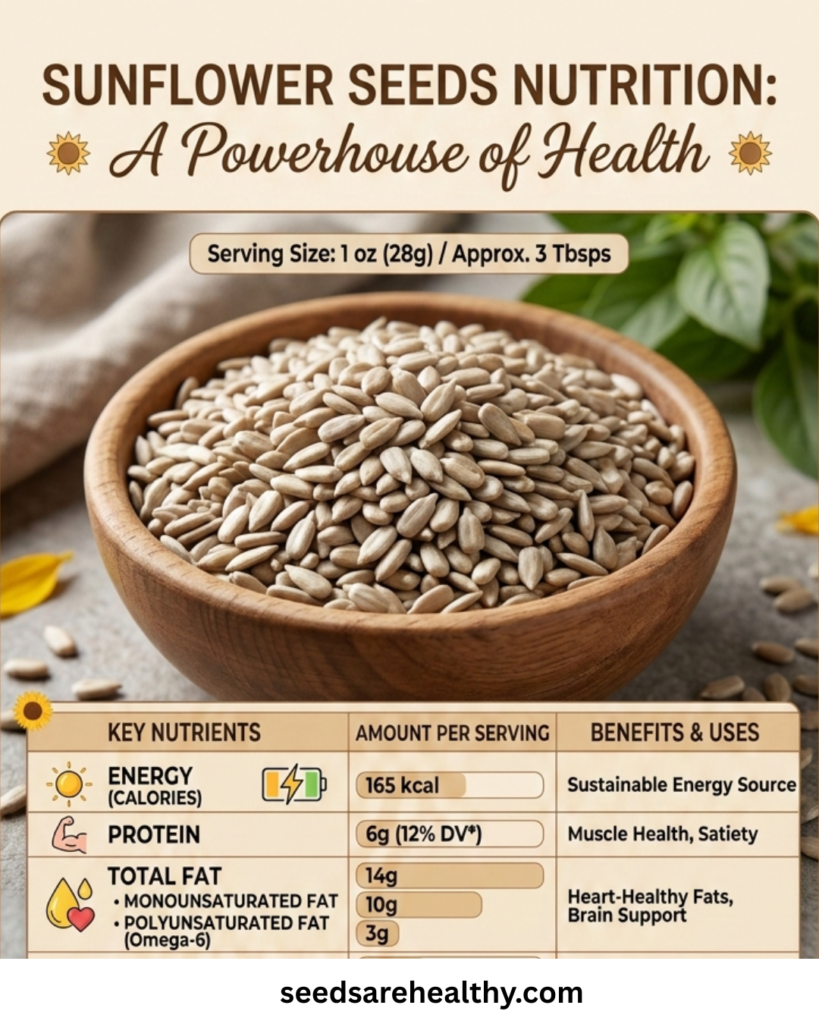
1 ounce (28g / about 3 tablespoons): ~164 calories
100 grams: ~584 calories
These calories come from a combination of healthy fats, protein, and fiber, making sunflower seeds a great snack in moderation
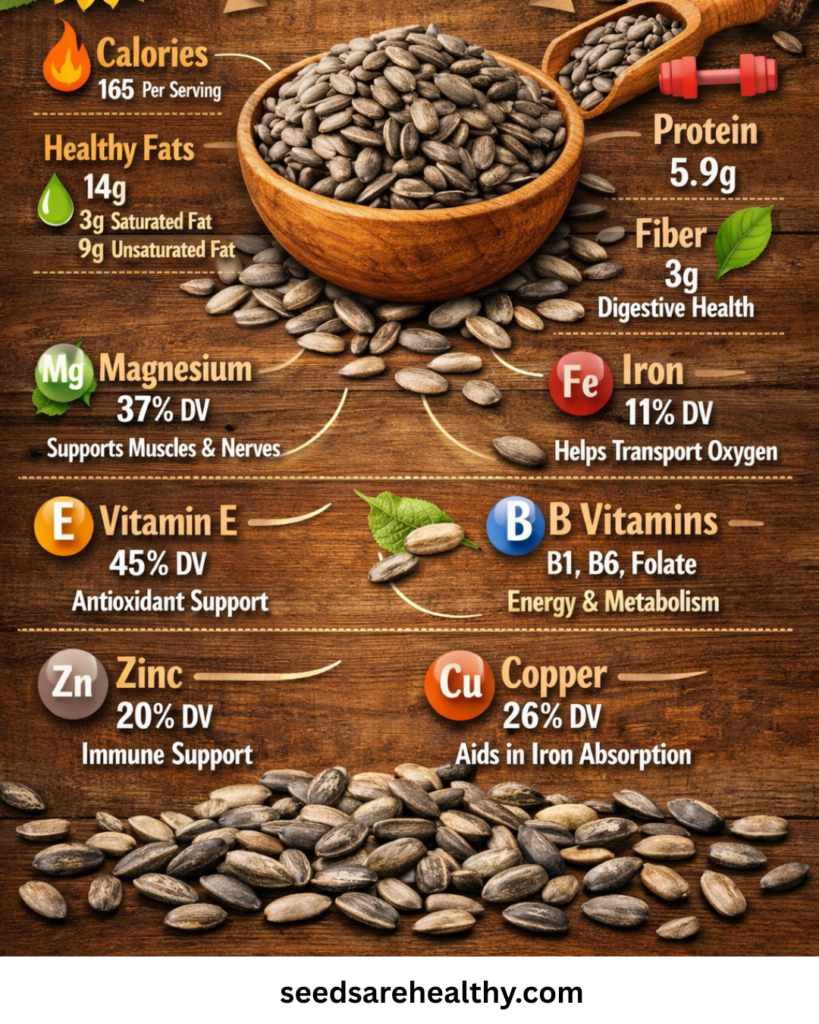
Sunflower Seeds Nutritional Breakdown (Per 1 Ounce / 28g Serving)
- Calories: 164
Carbohydrates: 6g
Fiber: 2.4g (aids digestion and supports gut health)
Protein: 5.5g (helps with muscle growth and satiety)
Fat: 14g
Unsaturated fats: ~12g (healthy fats for heart health)
Omega-6 fatty acids: 9g (supports skin and cell function)
Vitamin E: 37% of the Daily Value (powerful antioxidant for skin and immunity)
Magnesium: 9% of the Daily Value (essential for muscle and nerve function)
Selenium: 32% of the Daily Value (helps with thyroid function and immunity)
Iron: 6% of the Daily Value (supports oxygen transport in the body)
If you follow a low carb diet, read our guide on whether sunflower seeds are suitable for keto.
Health Benefits of Sunflower Seeds
1. Supports Heart Health
Sunflower seeds are rich in unsaturated fats, vitamin E, and magnesium, which help reduce inflammation and lower bad cholesterol levels.
2. Boosts Immunity
Packed with antioxidants, selenium, and zinc, sunflower seeds help strengthen the immune system and protect against infections.
3. Improves Skin and Hair Health
The high vitamin E content promotes glowing skin and healthy hair by reducing oxidative stress and preventing premature aging.
4. Supports Weight Management
Despite being calorie-dense, sunflower seeds keep you full for longer due to their fiber and protein content, helping with portion control and reducing cravings.
5. Enhances Brain Function
Rich in healthy fats, magnesium, and vitamin B6, sunflower seeds support cognitive function, reduce stress, and improve mood.
Are Sunflower Seeds Good for Weight Loss?
Sunflower seeds are calorie dense, but they can still support weight management when eaten in controlled portions. Their combination of protein, fiber, and healthy fats promotes satiety, helping reduce overeating.
However, portion control is important. A small handful is generally sufficient.
This connects to your existing weight loss article.
How to Use Sunflower Seeds in Your Diet
Sunflower seeds are versatile and can be added to various meals and snacks. Here are some ways to enjoy them:
1. Snack on Roasted Sunflower Seeds
Enjoy them as a crunchy, protein-rich snack.
Choose unsalted varieties for a healthier option.
2. Add to Salads and Bowls
Sprinkle sunflower seeds on salads, grain bowls, or roasted vegetables for added crunch and nutrition.
3. Blend into Smoothies
Add a spoonful of sunflower seeds to smoothies for an extra boost of protein and healthy fats.
4. Use in Baking and Cooking
Incorporate sunflower seeds into breads, muffins, and cookies for a nutty flavor and added nutrients.
Make homemade sunflower seed butter as a peanut butter alternative.
5. Top Yogurt or Oatmeal
Mix sunflower seeds into yogurt, overnight oats, or granola for a protein and fiber boost.
Possible Side Effects of Sunflower Seeds
Although sunflower seeds are nutritious, excessive intake may cause:
• Digestive discomfort due to fiber
• Excess calorie intake
• High sodium intake if salted
• Allergic reactions in sensitive individuals
Eating them in moderation and choosing unsalted varieties is recommended
How to Store Sunflower Seeds
Because sunflower seeds contain natural oils, they can go rancid if stored improperly.
To extend shelf life:
• Store in airtight containers
• Keep in a cool, dry place
• Refrigerate in warm climates
• Avoid exposure to sunlight
Shelled seeds spoil faster than unshelled ones.
Raw vs Roasted Sunflower Seeds: Which Is Better?
Both raw and roasted sunflower seeds provide similar core nutrients, including healthy fats, protein, fiber, vitamin E, and magnesium. However, there are some small differences to consider.
Raw sunflower seeds retain their natural nutrient profile without exposure to heat. This means slightly higher preservation of heat sensitive nutrients such as certain antioxidants.
Roasted sunflower seeds develop a stronger flavor and crunch, making them more enjoyable for many people. However, dry roasting at high temperatures may slightly reduce antioxidant levels and healthy fat stability over time.
For the healthiest option:
• Choose dry roasted instead of oil roasted
• Avoid heavily salted versions
• Store roasted seeds properly to prevent rancidity
Both raw and roasted sunflower seeds can be part of a balanced diet when consumed in moderation.
Salted vs Unsalted Sunflower Seeds
Salted sunflower seeds are popular as snacks, but they may contain high levels of sodium. Excess sodium intake can contribute to elevated blood pressure and water retention in sensitive individuals.
Unsalted sunflower seeds provide the same nutritional benefits without added sodium. They are generally a better choice for those monitoring heart health or overall salt intake.
If choosing salted varieties:
• Check sodium levels on the nutrition label
• Limit portion sizes
• Balance sodium intake throughout the day
For daily consumption, unsalted sunflower seeds are typically the healthier option.
Hulled vs Unhulled Sunflower Seeds
Sunflower seeds are available in two main forms:
Hulled (Shelled) Seeds
• Outer shell removed
• Ready to eat
• Easier to digest
• Commonly used in salads, baking, and smoothies
Unhulled Seeds
• Hard outer shell intact
• Often consumed as a snack
• Require cracking before eating
• Higher risk of dental discomfort if chewed incorrectly
From a nutritional perspective, the edible seed inside is the same. However, hulled seeds are more convenient for cooking and portion control.
Sunflower Seeds vs Chia Seeds: Quick Comparison
Both sunflower seeds and chia seeds are nutrient dense, but they differ in composition and usage.
Sunflower seeds are higher in vitamin E and provide a rich source of healthy fats, magnesium, and selenium. They are commonly eaten as snacks or added to savory dishes.
Chia seeds are higher in fiber and omega 3 fatty acids. They absorb liquid and form a gel like texture, making them popular in puddings and smoothies.
In simple terms:
• Sunflower seeds are excellent for vitamin E and antioxidant support
• Chia seeds are stronger in fiber and omega 3 content
Including a variety of seeds in your diet can provide a broader range of nutrients.
For comparison, see our detailed chia seeds nutrition guide.
Final Thoughts
Sunflower seeds are a nutrient-rich superfood that can easily be added to a healthy diet. They provide heart-healthy fats, protein, fiber, and essential vitamins and minerals, making them an excellent choice for overall wellness. Whether eaten as a snack or added to meals, sunflower seeds offer a delicious and nutritious way to boost your health.
Sunflower seeds can be a nutritious addition to a balanced diet when consumed in moderation and stored properly.
Frequently Asked Questions About Sunflower Seeds
How many calories are in a handful of sunflower seeds?
A small handful of shelled sunflower seeds, approximately 1 ounce or 28 grams, contains about 160 to 170 calories. Portion control is important because they are calorie dense.
Are sunflower seeds good for heart health?
Yes. Sunflower seeds contain unsaturated fats, magnesium, and vitamin E, which support heart health when consumed in moderation as part of a balanced diet.
Can sunflower seeds cause weight gain?
Sunflower seeds are high in calories, so excessive intake may contribute to weight gain. However, when eaten in controlled portions, their protein and fiber content can help promote fullness.
Are raw sunflower seeds healthier than roasted?
Raw sunflower seeds retain slightly more natural nutrients. However, dry roasted seeds without added oil or salt can still be a healthy choice.
How long do sunflower seeds last?
Unopened sunflower seeds can last several months to a year in a cool, dry place. Once opened, storing them in airtight containers in the refrigerator can help extend freshness and prevent rancidity.
Recent Posts
- Sunflower Seeds Nutrition: Calories, Benefits, Side Effects & How to Use Them
- How Long Do Chia Seeds Last? Complete Shelf Life Guide (Pantry, Fridge & Freezer)
- Can Chia Seeds Go Bad in the Fridge? Shelf Life, Signs, and Storage Tips
- Chia Seeds for Beginners: How to Start Slowly and Safely
- Common Mistakes People Make When Eating Chia Seeds