
Chia seeds are known for their long shelf life and high antioxidant content, but many people wonder whether they can still go bad when stored in the refrigerator. Since chia seeds contain delicate omega 3 fatty acids, proper storage plays an important role in preserving freshness and preventing rancidity.
The short answer is yes, chia seeds can go bad in the fridge if they are exposed to moisture, air, or improper storage conditions. While refrigeration extends shelf life significantly, it does not make chia seeds immune to spoilage.
This guide explains how long chia seeds last in the refrigerator, the signs of spoilage, common storage mistakes, and how to store them properly to maintain freshness.
For a complete breakdown of long term storage methods, read our guide on How to Store Chia Seeds Properly for Long Term Freshness.
Do Chia Seeds Go Bad in the Fridge?
Chia seeds naturally contain antioxidants that help protect their oils from oxidation. Because of this, they tend to last longer than many other seeds. However, they are not completely shelf stable forever.
Even in the refrigerator, chia seeds can spoil if:
• They are stored in a loosely sealed container
• Moisture enters the container
• They are repeatedly exposed to temperature changes
• They are stored near strong odors
• Soaked and dry seeds are mixed together
Refrigeration slows down oxidation and preserves nutrient quality, but it does not prevent damage caused by air and humidity. In fact, condensation inside the container is one of the most common reasons refrigerated chia seeds lose quality.
When stored properly in airtight containers, chia seeds can remain fresh for years. Improper handling is usually the real issue, not the refrigerator itself.
How Long Do Chia Seeds Last in the Fridge?
Shelf life depends on whether the seeds are whole, ground, soaked, opened, or unopened.
Whole Dry Chia Seeds
• Unopened package: Up to 4 to 5 years
• Opened and refrigerated: 2 to 3 years
Whole chia seeds are very stable when kept dry and airtight.
Ground Chia Seeds
Once ground, the oils are exposed to air, which increases the risk of oxidation.
• Refrigerated ground chia: 3 to 6 months
• Freezer storage: Up to 1 year
Grinding only small amounts at a time helps preserve freshness.
Soaked Chia Seeds
Soaked chia seeds behave very differently.
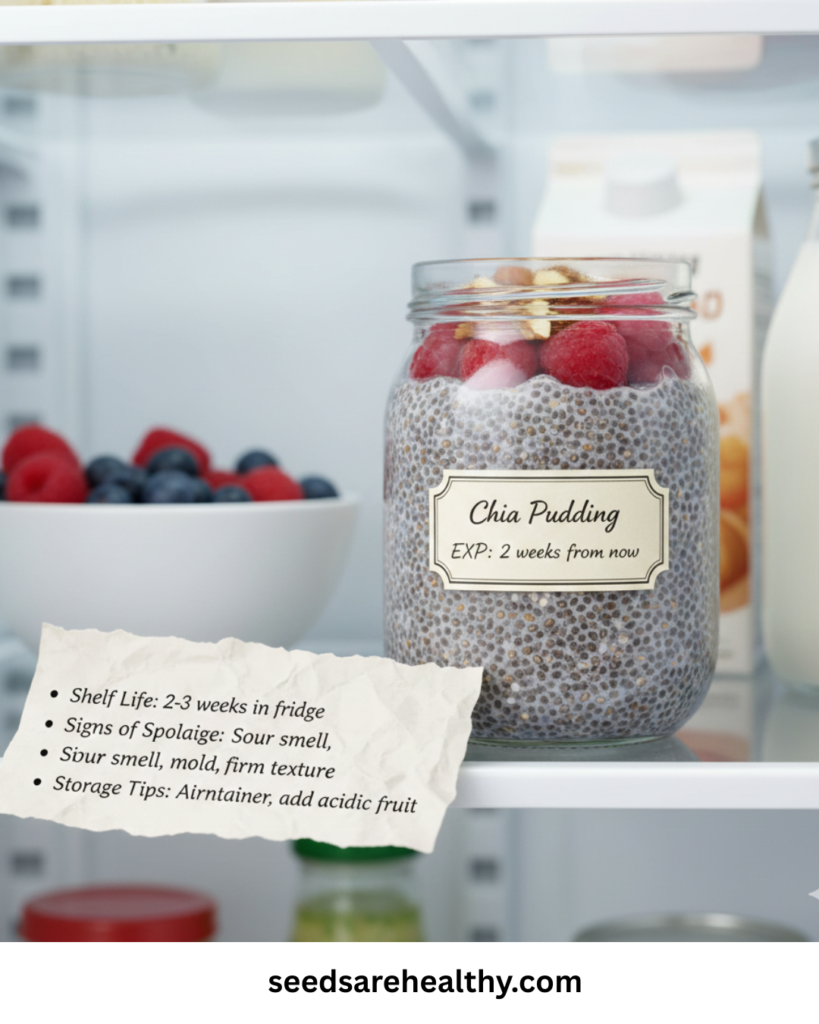
• Refrigerated soaked chia: 5 to 7 days
• Room temperature soaked chia: Not recommended beyond a few hours
Because water activates microbial growth, soaked seeds must always be stored in sealed containers in the refrigerator.
If you want to understand broader storage practices, you can also read our guide on how to store chia seeds properly for long term freshness.
Signs Chia Seeds Have Gone Bad
Even refrigerated chia seeds should be checked before use. Spoilage is usually easy to detect if you know what to look for.
1. Unusual Smell
Fresh chia seeds have a very mild, neutral scent. If they smell sour, musty, or similar to paint thinner, the oils may have turned rancid.
2. Bitter Taste
If the seeds taste sharp or bitter instead of mild and nutty, discard them immediately.
3. Clumping or Moisture
Dry chia seeds should flow freely. Clumping may indicate moisture exposure. Moist seeds are more prone to mold growth.
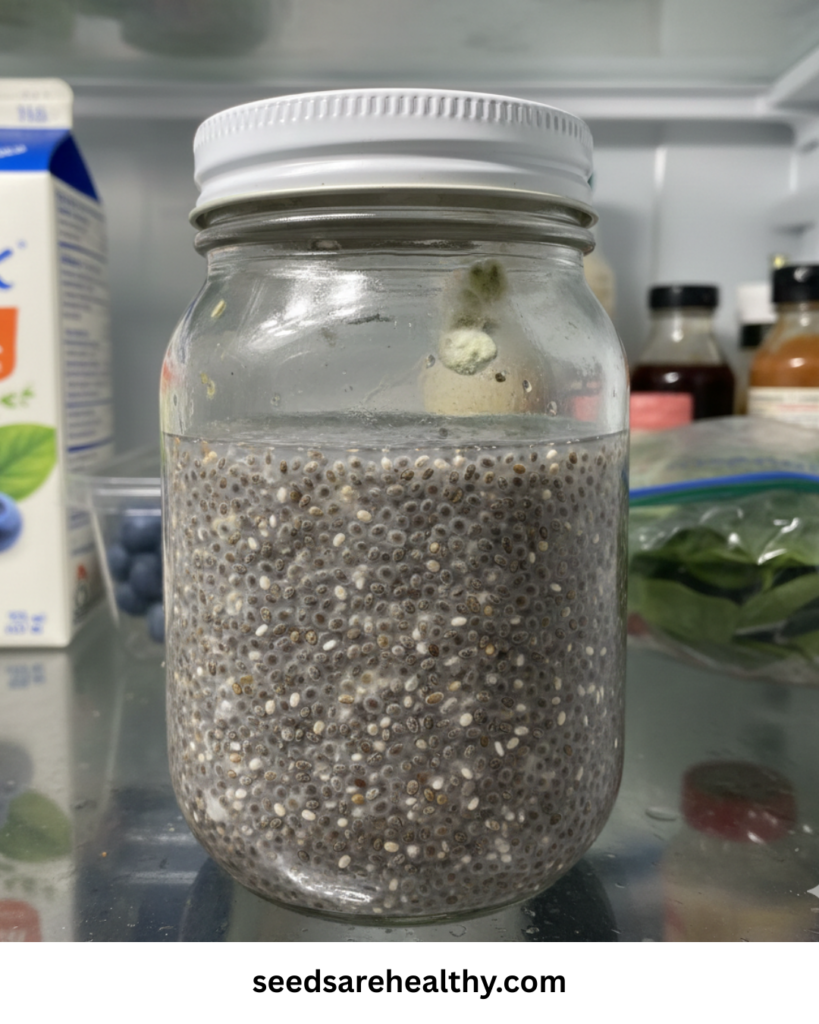
4. Visible Mold
Any visible mold, discoloration, or fuzzy growth means the seeds should be thrown away.
5. Sticky Texture
Dry seeds should not feel sticky. If they feel damp or sticky, they may have absorbed humidity.
If you are experiencing digestive discomfort after consuming stored chia seeds, it may be helpful to review our article on mistakes when eating chia seeds to understand preparation and hydration factors.
If you are unsure whether your preparation method affects digestion, see our article on Common Mistakes When Eating Chia Seeds.
Common Storage Mistakes That Cause Spoilage
Most cases of spoiled chia seeds are due to small but important storage errors.
Storing in Original Packaging
Many chia seeds are sold in resealable pouches, but these are not always fully airtight. Transferring seeds to a sealed glass container reduces air exposure.
Opening the Container Frequently
Repeatedly opening and closing containers introduces fresh air and humidity. If you buy chia seeds in bulk, divide them into smaller portions.
Mixing Wet and Dry Seeds
Never store soaked chia seeds in the same container as dry seeds. Even a small amount of moisture can shorten shelf life.
Keeping Seeds in the Fridge Door
The refrigerator door experiences frequent temperature fluctuations. Store chia seeds toward the back of the fridge where temperatures remain stable.
Ignoring Expiration Dates
While chia seeds often last beyond printed dates, they should still be inspected regularly for signs of spoilage.
Best Way to Store Chia Seeds in the Fridge
Refrigeration is especially useful in warm or humid climates. Here are practical storage tips:
• Use an airtight glass jar with a tight fitting lid
• Store toward the back of the refrigerator
• Keep away from moisture and condensation
• Label the purchase or opening date
• Avoid storing near strong smelling foods
If you live in a very humid region, refrigeration is generally safer than pantry storage.
For beginners, understanding both storage and portion control is important. You may also find our guide on how to start eating chia seeds safely helpful..
Can Chia Seeds Go Rancid in the Fridge?
Yes, rancidity can still occur in refrigerated chia seeds if they are exposed to oxygen for extended periods.
Omega 3 fatty acids are sensitive to oxidation. Although refrigeration slows this process, it does not eliminate it completely. Ground chia seeds are especially vulnerable because their surface area is larger.
Freezing is the best option for very long term storage, particularly for ground chia seeds or large bulk quantities.
Should You Refrigerate Chia Seeds After Opening?
Refrigeration is not mandatory in cool, dry climates. However, it does provide added protection and extends freshness.
You should strongly consider refrigeration if:
• You live in a warm climate
• Your kitchen is humid
• You buy chia seeds in large quantities
• You grind chia seeds regularly
For most households, refrigeration offers extra stability without much effort.
Frequently Asked Questions
Do chia seeds expire in the fridge?
Chia seeds do not spoil quickly, but they can degrade over time. Even in the refrigerator, exposure to air and moisture can shorten shelf life. Always inspect before use.
How long do soaked chia seeds last in the fridge?
Soaked chia seeds typically last 5 to 7 days when stored in an airtight container. Discard if there is any unusual smell or mold.
Can you freeze chia seeds instead?
Yes. Freezing chia seeds extends shelf life even further and helps protect omega 3 content. Make sure they are stored in airtight containers to prevent moisture exposure.
What happens if you eat spoiled chia seeds?
Consuming rancid seeds may cause digestive discomfort and reduce nutritional benefits. If seeds smell or taste off, it is best to discard them.
Are refrigerated chia seeds better than pantry stored seeds?
Both methods can work if done properly. Refrigeration is more protective in humid or warm climates.
To better understand shelf life differences between soaked and dry seeds, read
Final Thoughts
Chia seeds are naturally long lasting, but they can still go bad in the fridge if not stored correctly. Air, moisture, and temperature fluctuations are the main causes of spoilage.
To keep chia seeds fresh:
• Store them in airtight containers
• Keep them dry
• Refrigerate in warm climates
• Avoid mixing soaked and dry seeds
• Check for smell and texture changes
With proper storage, chia seeds can remain safe and nutrient rich for years. Understanding shelf life and spoilage signs helps you avoid waste and maintain quality in your everyday meals.
Recent Posts
- Can Chia Seeds Go Bad in the Fridge? Shelf Life, Signs, and Storage Tips
- Chia Seeds for Beginners: How to Start Slowly and Safely
- Common Mistakes People Make When Eating Chia Seeds
- Chia Seeds Nutrition: Calories, Benefits, and How to Use Them
- The Incredible Benefits of Sesame Seeds Revealed: Doctors Are Shocked!