

Chia seeds and flaxseeds are rich in omega 3 fatty acids, fiber, and antioxidants, but their delicate oils can turn rancid if not stored properly. Many people buy these seeds in bulk without realizing that heat, light, air, and moisture can reduce their nutritional value over time.
This guide explains exactly how to store chia seeds and flaxseeds after opening, whether they should be kept in the pantry or refrigerator, how long they last, and how to tell if they have gone bad.
Medical Disclaimer
The information provided on this website is for educational and informational purposes only and is not intended as medical advice. It does not replace professional medical consultation, diagnosis, or treatment. Always seek the advice of a qualified healthcare professional before making any changes to your diet, health routine, or lifestyle.
Why Proper Storage Matters for Chia Seeds and Flaxseeds
Chia and flaxseeds are rich in delicate nutrients like alpha-linolenic acid (ALA), a type of omega-3 fatty acid prone to oxidation when exposed to heat, light, or air. Lignans (antioxidants in flaxseeds) and soluble fiber in chia seeds also degrade over time if stored improperly. Rancid seeds not only taste bitter but lose their health benefits and may even harm your body with free radicals. You can also review these common mistakes when eating chia seeds to avoid storage related issues.
According to a 2018 study in Food Chemistry, flaxseeds stored at room temperature lost 58% of their ALA content within 12 weeks, while refrigerated seeds retained over 90%. Similarly, chia seeds’ antioxidant capacity drops significantly when exposed to humidity.
How to Store Chia Seeds for Long-Term Freshness
Mastering how to store chia seeds ensures they stay nutrient-dense and ready to use. Here’s a step-by-step breakdown:
1. Choose the Right Container
Airtight containers: Use glass jars with silicone-sealed lids or BPA-free plastic containers. Avoid bags with air gaps.
Opaque or dark glass: Blocks light, which accelerates oxidation. Mason jars stored in a cupboard work well.
Smaller portions: Divide bulk purchases into smaller containers to limit air exposure.
2. Ideal Storage Conditions
Cool & Dark: Store in a pantry away from stoves or sunlight. Ideal temperature: below 70°F (21°C).
Refrigerate or Freeze: For long-term storage (6+ months), refrigerate chia seeds. Freezing extends shelf life up to 4 years.
Fridge vs Pantry: Which Is Better?
Pantry storage works well if:
• Temperature stays below 21°C
• Humidity is low
• Seeds are stored in airtight containers
Refrigeration is better if:
• You live in a warm climate
• You buy seeds in bulk
• You use ground flaxseeds
• You want maximum shelf life
Freezing is ideal for:
• Long term storage over 1 year
• Ground flaxseed
• Large bulk purchases
In warmer regions, refrigeration is generally safer for preserving omega 3 content.
3. Avoid Moisture
Chia seeds absorb water quickly, leading to clumping or mold. Add a silica gel packet to the container, or roast seeds lightly (at 175°F for 15 minutes) before storage in humid climates. If you are new to chia seeds, read our guide on how to start eating chia seeds safely.
Pro Tip: Buy chia seeds in small quantities if you use them slowly. Opt for vacuum-sealed packaging when possible.
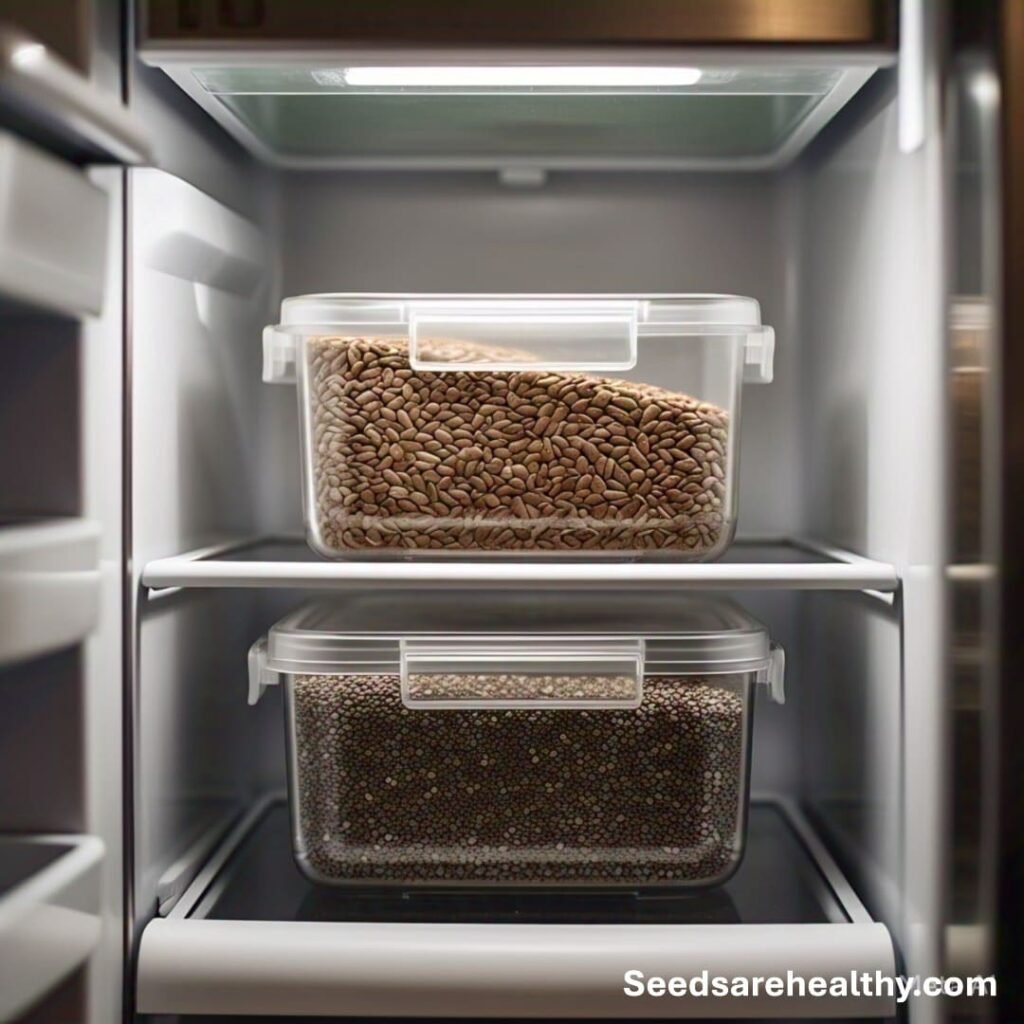
How to Store Flaxseeds : Whole vs. Ground
Flaxseeds are trickier due to their higher oil content. Whole seeds last longer, but ground flax (meal) offers better nutrient absorption.
Whole Flaxseeds
Pantry: Store in an airtight container for up to 12 months.
Fridge/Freezer: Refrigerate for 1 year or freeze for 2 years. Use opaque containers to block light.
Ground Flaxseeds (Meal)
Fridge: Lasts 1–2 weeks in a sealed jar.
Freezer: Extend freshness to 6 months by portioning into ice cube trays or small bags.
Storage Hack: Grind flaxseeds weekly in a coffee grinder for peak freshness.
For a more detailed breakdown of storage timelines, read our complete guide on how long chia seeds last under different storage conditions.
General Seed Storage Tips for Maximum Freshness
Use Oxygen Absorbers: Add food-grade oxygen absorbers to containers to slow oxidation.
Label & Date: Track purchase dates to use older seeds first.
Avoid Heat Sources: Keep seeds away from ovens, dishwashers, or windows.
Buy Fresh: Check harvest dates when purchasing. Opt for reputable brands with UV-protected packaging.
Shelf Life of Chia Seeds vs. Flaxseeds
| Storage Method | Chia Seeds | Whole Flaxseeds | Ground Flaxseeds |
|---|---|---|---|
| Pantry (Room Temperature) | 1–2 years | 6–12 months | 2–4 weeks |
| Refrigerator | 2–3 years | 1 year | 1–2 weeks |
| Freezer | Up to 4 years | 2 years | 6 months |
Important Note: Shelf life depends heavily on storage conditions. High humidity or exposure to air can shorten these timelines significantly.
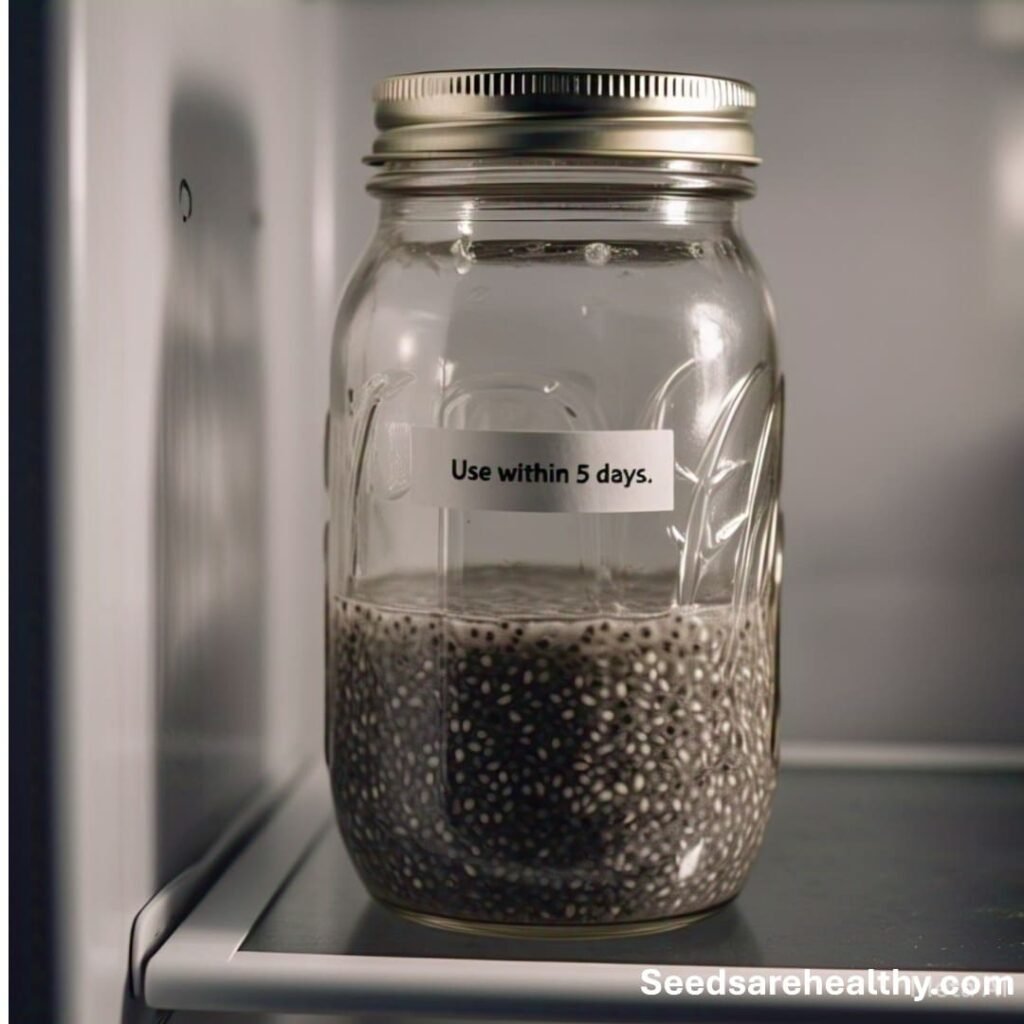
5 Creative Hacks You Haven’t Tried
Repurpose Coffee Bean Bags: Many have built-in degassing valves to release air.
Vacuum-Seal in Portions: Use a vacuum sealer for freezer storage.
DIY Oxygen-Free Jars: Fill containers to the brim to minimize air space.
Silica Gel Packets: Reuse packets from seaweed snacks to absorb moisture.
Dark Pantry Drawer: Dedicate a drawer lined with foil to block light.
Signs Your Seeds Bad
Smell: Rancid seeds smell like paint or nail polish remover.
Taste: Bitter or sour flavor.
Texture: Clumping (chia) or sticky residue (flaxseeds).
Color: Dark spots or dull appearance.
When in doubt, toss them out! Consuming rancid seeds can cause inflammation. If you experience bloating or discomfort, read about stomach pain after eating chia seeds.

FAQs: Storing Chia Seeds and Flaxseeds
How to store chia seeds after opening?
Store chia seeds in an airtight container in a cool, dry place, away from sunlight. For longer shelf life, refrigerate or freeze them.
Do chia seeds go bad?
Yes, chia seeds can go bad if exposed to moisture, heat, or air for extended periods. Signs of spoilage include an off smell, mold, or a bitter taste.
How long do chia seeds last?
Dry chia seeds can last 2-4 years when stored in a cool, dry place. Refrigeration can extend their shelf life.
Can I store chia and flaxseeds together?
Yes, if both are whole and stored in the fridge. Avoid mixing ground and whole seeds.
Do chia seeds need refrigeration?
No, but refrigeration extends freshness. In cool, dark pantries, they’ll last 1–2 years.
Even properly stored seeds can degrade over time. Learn more in our detailed guide on Can Chia Seeds Go Bad in the Fridge.
Should You Store Ground Flaxseed Differently?
Ground flaxseed spoils faster because the oils are exposed to air. If you use flaxseed meal regularly, store it in the refrigerator in a tightly sealed container and consume within 1 to 2 weeks.
For longer storage, freeze in small portions to reduce repeated exposure to air.
Conclusion
Storing chia seeds and flaxseeds properly protects their omega 3 content, fiber quality, and overall freshness. Whether you choose pantry storage or refrigeration depends on climate, quantity, and whether the seeds are whole or ground.
By using airtight containers, minimizing light exposure, and controlling temperature, you can safely extend shelf life and avoid rancidity.
Recent Posts
- Chia Seeds for Weight Loss: Benefits, Calories, and How to Use Them
- Sunflower Seeds Nutrition: Calories, Benefits, Side Effects & How to Use Them
- How Long Do Chia Seeds Last? Complete Shelf Life Guide (Pantry, Fridge & Freezer)
- Can Chia Seeds Go Bad in the Fridge? Shelf Life, Signs, and Storage Tips
- Chia Seeds for Beginners: How to Start Slowly and Safely