
Chia seeds are commonly included in everyday diets because of their fiber content, healthy fats, and versatility. They are often consumed either soaked or dry, depending on personal preference and how they are added to meals.
While chia seeds are sometimes discussed in relation to hair care, the way they are prepared can influence digestion, hydration, and overall dietary experience. Soaked and dry chia seeds behave differently in the body, particularly in how they absorb liquid and how easily they are digested.
This article explains the differences between soaked and dry chia seeds from a nutrition, digestion, and general hair care perspective. The information shared here is educational and intended to help readers understand common usage patterns rather than provide medical or cosmetic advice.
Medical Disclaimer
The information provided on this website is for educational and informational purposes only and is not intended as medical advice. It does not replace professional medical consultation, diagnosis, or treatment. Always seek the advice of a qualified healthcare professional before making any changes to your diet, health routine, or lifestyle.
Understanding Chia Seeds
Chia seeds are small black or white seeds derived from the Salvia hispanica plant. They are valued for their fiber content, plant-based fats, and naturally occurring minerals. When exposed to liquid, chia seeds absorb moisture and form a gel-like texture, which influences how they are consumed and digested.
Chia seeds can be eaten in two common ways:
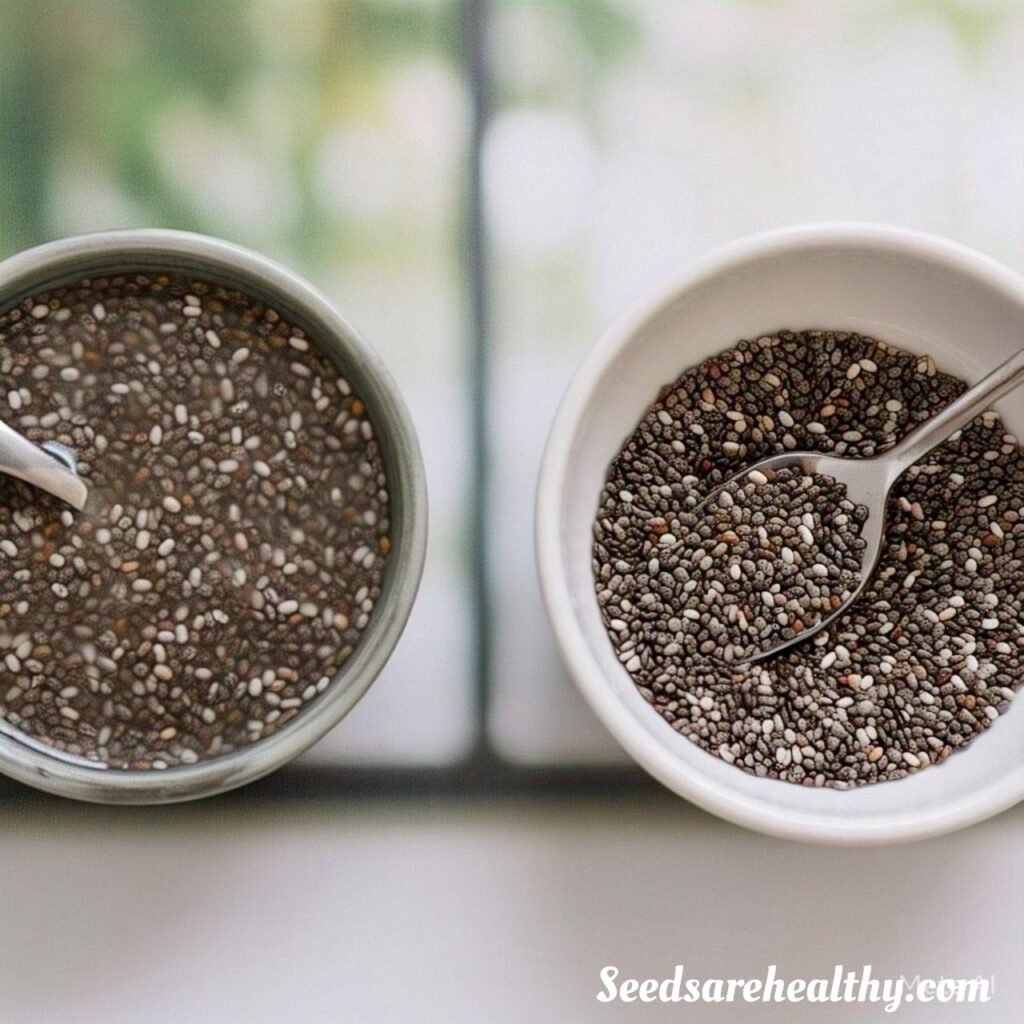
Soaked, where the seeds are mixed with liquid and allowed to absorb moisture before consumption
Dry, where the seeds are added directly to foods that already contain moisture
Both forms contain the same nutrients, but the preparation method affects texture, hydration, and digestion.
Chia seeds are often mentioned in hair care discussions, and their use in diets is sometimes linked to broader conversations around hair growth.
Nutritional Composition of Chia Seeds
Chia seeds provide:
Dietary fiber, including both soluble and insoluble types
Plant-based fats, including omega-3 fatty acids
Small amounts of protein
Minerals such as calcium, magnesium, and iron
These nutrients contribute to overall dietary balance. How effectively they are utilized can vary depending on preparation method, portion size, and individual digestion. For a broader overview of nutrients, readers may explore the complete chia seeds nutritional profile.
Soaked Chia Seeds: Characteristics and Common Uses
Soaked chia seeds are prepared by mixing the seeds with water or another liquid and allowing them to sit until they form a gel-like texture. This process usually takes 15 to 30 minutes.
Common characteristics of soaked chia seeds
Soft, gel-like consistency
Often used in drinks, puddings, and blended foods
Already hydrated before consumption
Digestion and hydration considerations
Some people find soaked chia seeds easier to consume, especially in liquids or smooth foods. Because the seeds have already absorbed liquid, they may feel gentler during digestion for individuals who are sensitive to high-fiber foods.
Dry Chia Seeds: Characteristics and Common Uses
Dry chia seeds are commonly sprinkled over foods such as yogurt, oatmeal, salads, or cereal. In this form, they absorb liquid after consumption.
Common characteristics of dry chia seeds
Crunchy texture
Easy to add to solid meals
Require sufficient fluid intake
Digestion and hydration considerations
Dry chia seeds rely on available fluids during digestion. When consumed without enough liquid, they may cause temporary discomfort for some people. For this reason, dry chia seeds are typically paired with moist foods or accompanied by adequate hydration.
While both forms contain the same nutrients, soaked chia seeds take the crown when it comes to hair growth.
Why? Because your body can digest and absorb soaked chia seeds more easily, meaning the hair-friendly nutrients get into your system faster and more effectively. Plus, they help support hydration—critical for both scalp and hair health.
Differences in Digestion and Hydration
The primary difference between soaked and dry chia seeds lies in how they interact with liquids:
Soaked chia seeds absorb liquid before consumption, which may feel more comfortable for some individuals
Dry chia seeds absorb liquid after consumption and depend on hydration from foods or beverages
Digestive comfort varies from person to person and can be influenced by preparation method, portion size, and overall diet.
Digestive comfort can vary based on preparation method, hydration, and individual tolerance, especially for people exploring digestive comfort with chia seeds.
How Preparation Choice Relates to Hair Care Discussions
Chia seeds are sometimes mentioned in hair care discussions because they contain nutrients that are part of a balanced diet. However, whether chia seeds are consumed soaked or dry does not directly determine hair-related outcomes.
Soaked chia seeds are typically chosen for beverages and smooth-textured foods, while dry chia seeds are more commonly used in solid meals. The choice between soaked and dry chia seeds is usually based on digestion comfort, texture preference, and how they fit into daily eating habits rather than specific hair benefits.
Hair health is influenced by multiple factors, including overall nutrition, consistency, and individual physiology, rather than chia seed preparation alone.
This preparation method is often recommended for beginners starting with chia seeds who prefer a softer texture.
How to Use Chia Seeds in Daily Meals
Preparation methods vary based on individual tolerance and personal preference.
Common ways to use soaked chia seeds
Mixed into water or plant-based milk
Added to smoothies or blended drinks
Used in puddings or soft-textured recipes
Common ways to use dry chia seeds
Sprinkled over yogurt, oatmeal, or cereal
Added to salads or grain bowls
Mixed into baked foods
Regardless of preparation method, moderation and adequate hydration are important when including chia seeds in the diet.
Precautions and General Considerations
Chia seeds are high in fiber and should be introduced gradually
Adequate hydration is important, especially when consuming dry seeds
Large quantities may cause digestive discomfort for some individuals
Anyone with underlying health conditions should consult a healthcare professional before making significant dietary changes
Frequently Asked Questions
Is it necessary to soak chia seeds before eating?
Soaking is not mandatory, but it is commonly preferred for drinks and blended foods. Dry chia seeds should be consumed with sufficient liquid.
Can soaked and dry chia seeds be used interchangeably?
They contain the same nutrients, but their texture and hydration behavior differ, which affects how they are used in recipes.
Do soaked chia seeds digest better than dry chia seeds?
Some people find soaked chia seeds easier to digest, but individual tolerance varies.
Are chia seeds safe for daily consumption?
Chia seeds are generally considered safe in moderation as part of a balanced diet, provided adequate hydration is maintained.
Do soaked or dry chia seeds directly improve hair health?
Chia seeds contribute nutrients that are part of overall dietary balance, but hair health depends on multiple factors beyond seed preparation.

Final Thoughts
Soaked and dry chia seeds differ mainly in preparation, texture, and how they interact with digestion and hydration. Soaked chia seeds are commonly preferred in liquids and soft foods, while dry chia seeds are often added to solid meals.
The choice between soaked and dry chia seeds depends on personal preference, digestion comfort, and how they fit into everyday eating patterns. When used mindfully and in moderation, both forms can be included as part of a balanced diet.
How chia seeds fit into hair care routines depends on overall diet, consistency, and individual response rather than preparation method alone.
Recent Posts
- Chia Seeds for Beginners: How to Start Slowly and Safely
- Chia Seeds Nutrition: Calories, Benefits, and How to Use Them
- The Incredible Benefits of Sesame Seeds Revealed: Doctors Are Shocked!
- Can You Eat Sunflower Seeds on Keto Diet? Carbs, Benefits, and Tips
- 7 Power-Packed Seeds You Should Eat to Improve Gut Health